How to grow Wollemi pine from seed.

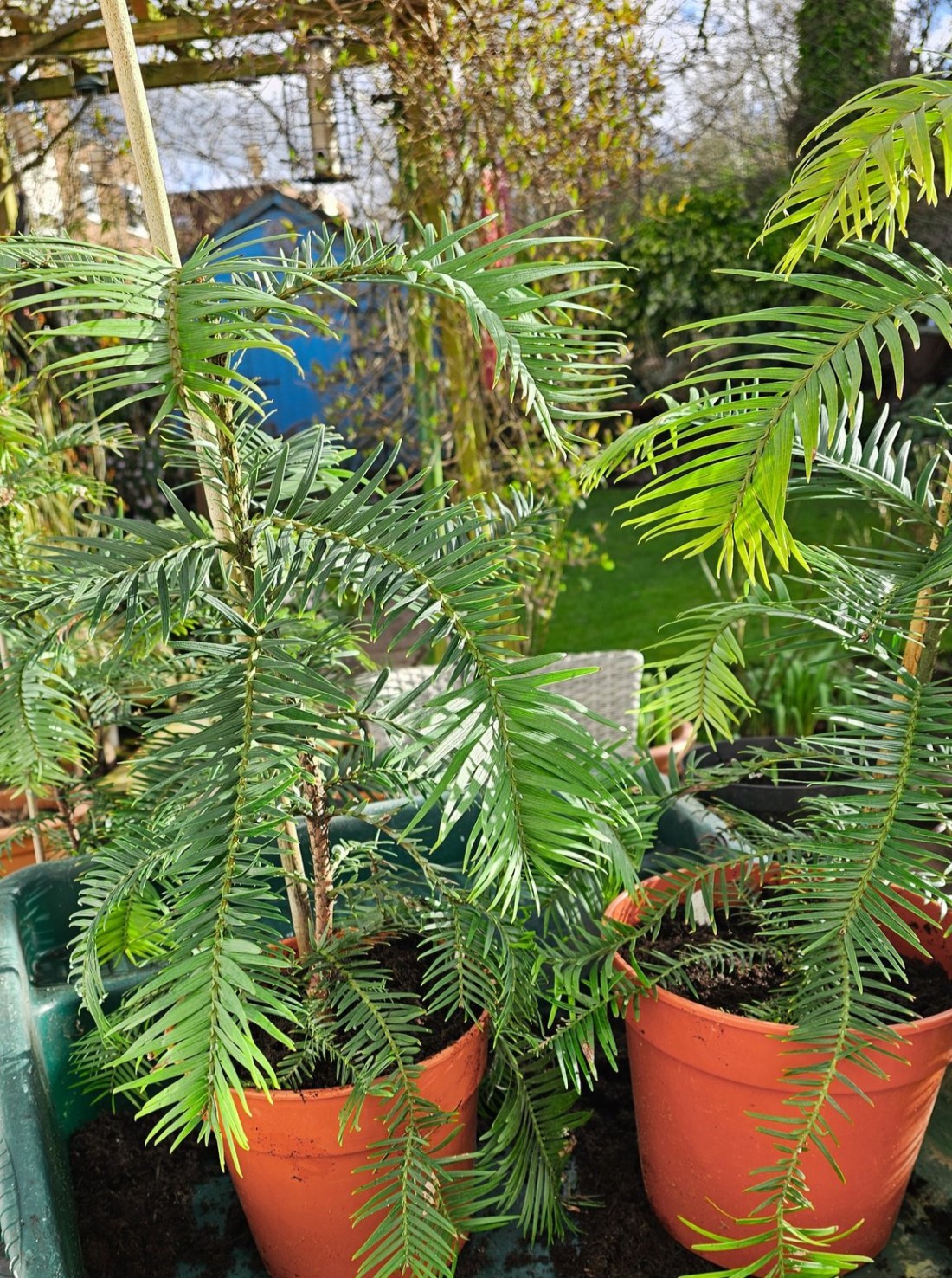
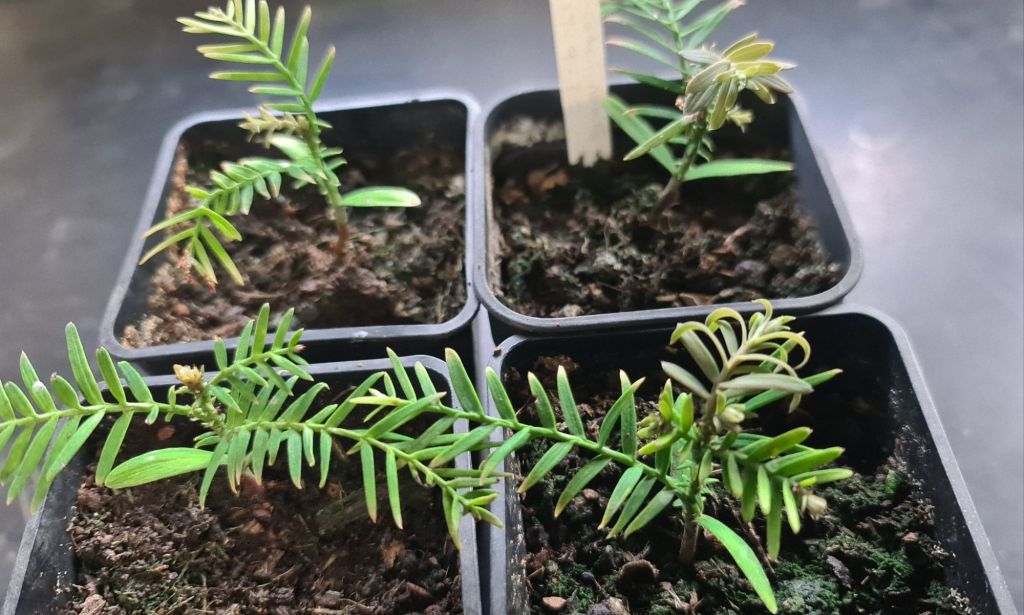
4 YEAR OLD PLANTS

Often known as the fossil tree, Wollemia nobilis was once thought to be long extinct, it was only known through fossil records until the discovery of a handful of live specimens in 1994. The trees were found growing in sandstone gauges within temperate rainforest in the Wollemi National Park in New South Wales, Australia. With the help of micropropagation, the following decades saw many thousands of trees grown and distributed throughout the world. The common name, Wollemi pine was trademarked to help manage distribution and to protect the original wild specimens.

Jump forward 30 years and there’s hardly a botanical garden or arboretum without at least one specimen of this ancient conifer. Still though, they are an expensive tree to buy, especially as a mature specimen. So here is a way to grow your own for little cost, but a degree of patience is needed.

As most of us don’t have the luxury of a micropropagation lab at home, we need to look for simpler methods. It is possible to take cuttings from Wollemia but I am going to concentrate here on growing them from seed.

SOURCING SEED

FEMALE CONE

First of all, you are going to need to source some seed and this can be tricky. Wollemi are monoecious, which means the produce both male and female reproductive organs. Male cones which carry pollen are long and narrow, female cones are round and once fertilised will produce seed. It takes around 6 months for a small female cone to be pollinated, a further 18 months for it to grow and for the seeds to ripen. Often a mixture of larger, fertilised cones will be visible on the same tree as new, unfertilised cones. The picture above shows a female cone. In the foreground are the seeds, behind the seeds are the cone and the woody scales. I have seen these scales fraudulently sold on ebay, paraded as seeds. I have also seen seed listed in packets of around 50. Bear in mind a ripe cone will only contain around 10 viable seeds so any which are sold in large quantities might not be worth buying. It is important to only buy pre-tested seed from a reliable seller.

If you are lucky enough to be able to harvest your own seed then keep an eye on the female cones from around August to September. The green cones will start to tinge orange or brown and when handled, the scales will feel like they are loosening. They are now ready to harvest but you will need to be quick. As soon as those scales loosen, they are likely to fall quickly. The cone will not drop all in one like an apple, the scales will fall away and the seeds will disperse, so it’s important to collect the cones directly from the tree as you won’t be able to collect them from the ground.

SOAKING AND TESTING SEED

Wollemia nobilis is not a true pine. It is a coniferous relative of the monkey puzzle (Araucaria araucana) in the Araucariaceae family. Thankfully, unlike true pines, the seed will germinate without stratification, (the process of artificially breaking dormancy by means of moisture or temperature manipulation). The cones contain so many seeds that sowing them all would mean countless seed trays. Therefore, it is better to test viability first. This is very easy. Take a large bowl, preferably clear for visibility, fill it with water and scatter the surface with seeds. Leave the seeds to soak for 24 hours, occasionally pushing them below the surface. The viable seeds will drop to the bottom and non viable will remain on the surface. Carefully skim off the non viable then pick out the viable from the bottom. The viable seed are plump and when pressed feel hard and will not depress. Notice the difference to the non viable, floaters, which are empty and will press flat.
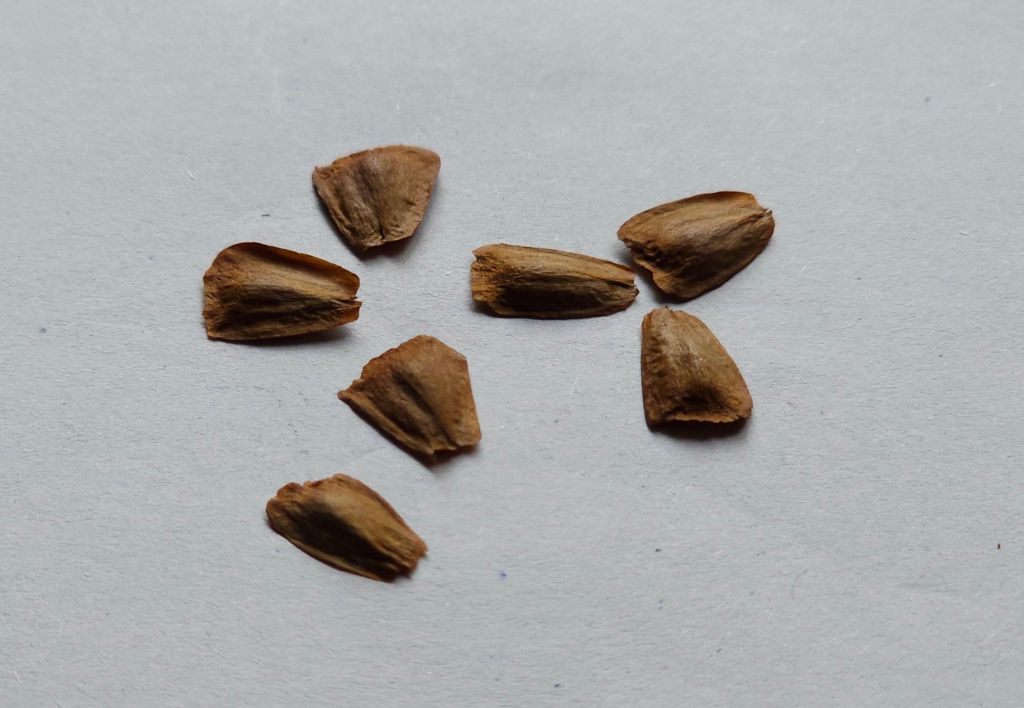
Viable seed

SOWING WOLLEMIA NOBILIS

I have tried sowing fresh seed in September and sowing in spring. The seeds which I sowed in September were sown on a free draining compost with added sand and covered with a couple of millimeters of the same mix. The tray was kept moist at a temperature of around 25 Celsius. Germination did not take place until April, next spring. 8 out of 10 seeds germinated together within a couple of weeks and I pricked these seedlings out once a set of true leaves had appeared. I kept the the tray and found the other two seeds germinated a few weeks after the others had been pricked out. As you can see from the picture below, lots of moss had grown on the surface but this did not bother the seedlings at all.

The seeds which I sowed under the same conditions but in February, germinated around the same time in April. I am guessing light levels are an important factor and the light here in the UK is optimal during April.
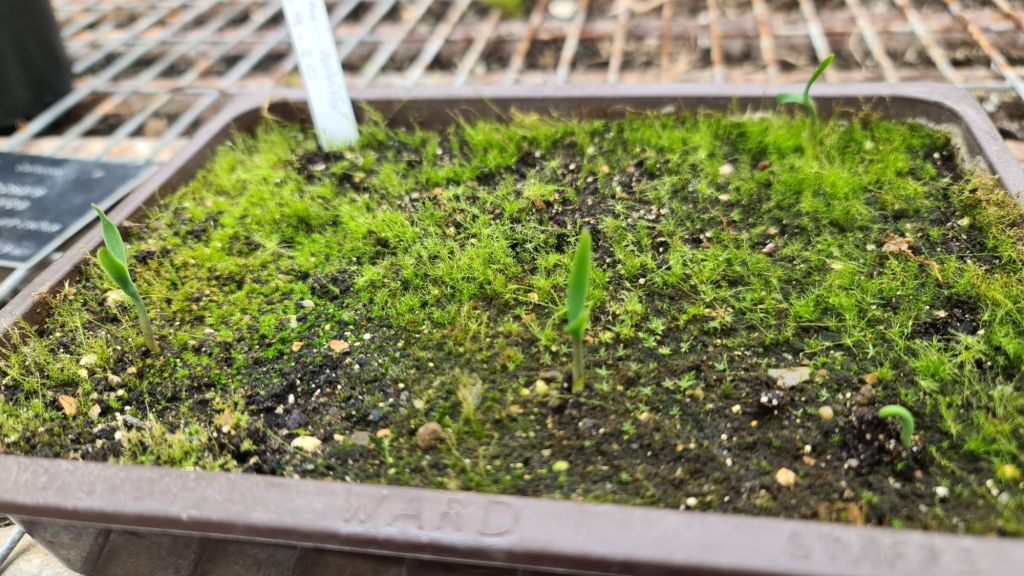
FIRST GERMINATION

The leaves which are emerging in the picture above are known as cotyledons or seed leaves. It’s best to wait until true, more recognisable leaves emerge before pricking out into small pots or cell trays.

PRICKING OUT AND POTTING ON
ONE YEAR OLD PLANTS

I use a peat free ericaceous compost for my plants, from the pricking out stage onwards. I mix in some sharp sand to assist drainage and sometimes perlite to lighten the growing medium. The plants in the picture above show true juvenile leaves with the cotyledons still visible below. These plants are one year old. Young plants do tend to grow quite slowly in their first year and I keep them in an unheated greenhouse during at least their first winter for a little protection. After that first year, growth seems to accelerate. Be sure to check the plants never become root bound and pot them on at least once each year.

THREE YEAR OLD PLANTS
THE NEXT GENERATION

A Fragrant Winter Wonderland

Hamamelis x intermedia ‘Livia’

One of the most common questions I am asked as a gardener is, “What is your favourite season?” I can’t answer this. The truth is I love all seasons but if someone were to ask me what is my favourite time of year to walk around the garden and to chat about plants, then the answer will always be winter. I love to point out the little details which people might usually walk straight past and I love to see the surprise on their faces that there is so much to see at this time of year.

The winter garden is filled with perfume. While some winter flowers are beautiful, many plants put all of their effort into producing fragrance in order to attract pollinators. Low light levels mean displaying showy, colourful flowers can be a waste of effort but producing a sweet perfume which can be carried on the breeze will entice cold hardy foraging insects. Bumblebees often venture out on milder winter days, sometimes even honeybees, so these winter blooms can offer vital pollen and nectar. Flies and hoverflies also play their part in pollination.

I thought I would share a few of my favourite winter flowering plants.

Witch-hazel

Hamamelis mollis

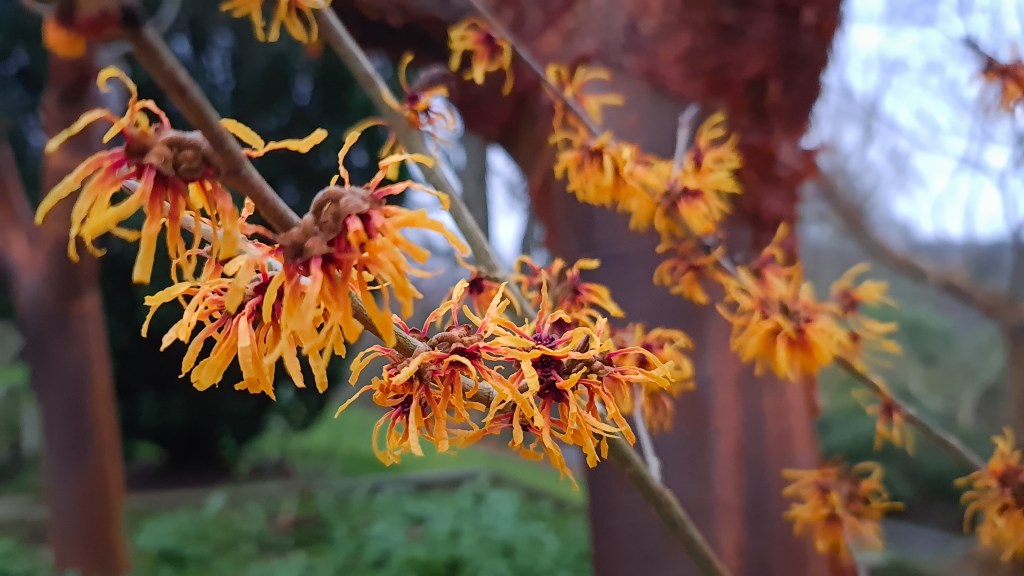
One of the most recognisable winter flowering plants, witch-hazels offer a bright and cheerful splash of colour during the darkest days. Witch-hazels are very photogenic. The low winter sun, flashing through their bare branches and spidery flowers creates magical scenes and plenty of photo opportunities. Can you imagine wandering through a forest and stumbling upon such a spectacular plant in its native habitat? There are five recognised species of hamamelis. Three of these hail from North America: H. virginiana, H. vernalis and H. ovalis. One species is native to Japan: H. japonica and one to China: H. mollis

Hamamelis mollis (mollis meaning soft) is the Chinese witch-hazel. It has one of the best scents, better even than most of the man made cultivars. Flowering usually from December to February, for us here in the Midlands of England but peaking around mid January, this large shrub emits a potent scent which can travel great distances. The scent, to me, smells like lemon but with a hint of spice.

Hamamelis x intermedia ‘Orange Peel’

While Hamamelis mollis makes for a very large, sprawling shrub. Hamamelis x intermedia ‘Orange Peel’ is slightly more compact. The very showy orange flowers are centered with carmine red and they quite appropriately smell of orange peel. Their sweet scent is not the strongest but on a good day it can be picked up from quite a few metres away.

The x intermedia types are a hybrid between the Chinese and Japanese witch-hazels.

Hamamelis vernalis ‘Christmas Cheer’

Hamamelis vernalis (Ozark witch-hazel) is native to the Ozark Plateau in central North America. One cultivar of this species, H. vernalis ‘Christmas Cheer’ is my favourite of all witch-hazels. This plant produces tiny red and yellow flowers reliably in time for Christmas Day. The powerful scent reminds me of sweet, Christmas spiced nuts. Unfortunately this cultivar is very difficult to get hold of in the UK but other cultivars of vernalis are available, such as the purple flowered ‘Amethyst’.

Daphne

Daphne bholua ‘Jacqueline Postill’

Daphne odora was one of my Grandma’s favourite plants but she never managed to own one for herself. Maybe that is why I am obsessed with this genus of the thymelaeaceae family and always on the lookout for new plants. My Grandma also gave me an early insight into remembering botanical names by using memory links. To remember Daphne odora, she suggested I imagine my aunt Dora falling flat onto her back in the shrub and shouting to her friend, “Help Daphne!”, to which Daphne would reply, “Oh Dora!”.

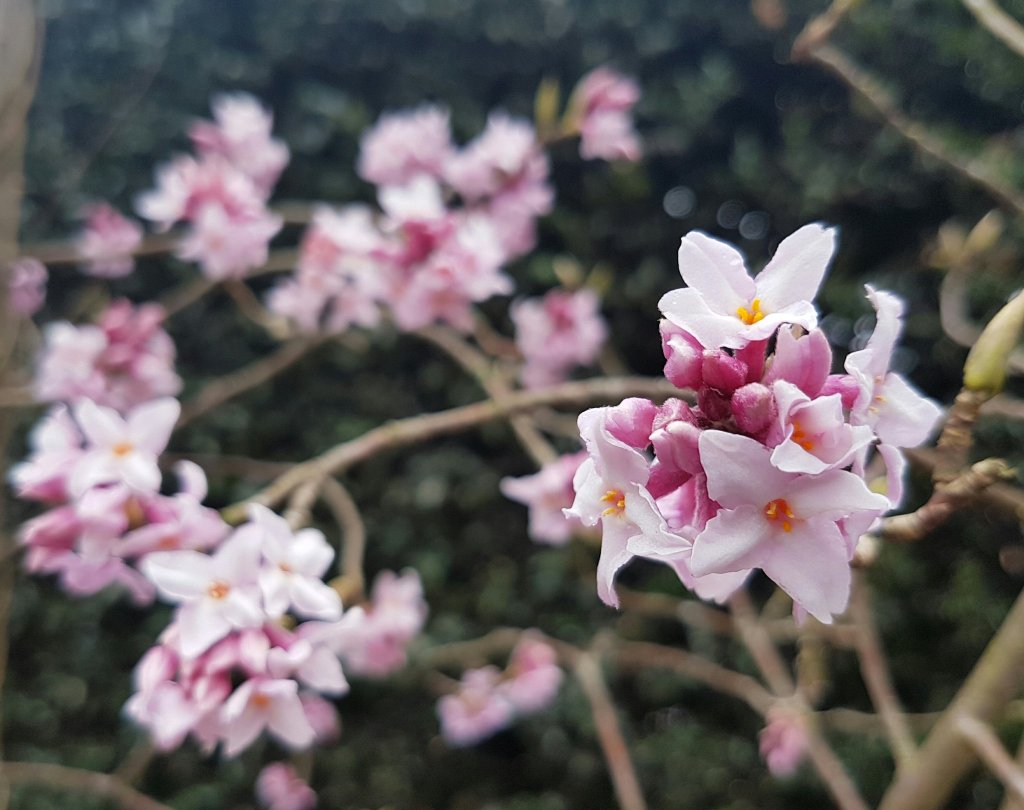
Daphne bholua ‘Jacqueline Postill is one of the most well known Daphnes. Usually the shrub is smothered in highly fragrant, sugar pink flowers from early January until mid February. This year, 2023, where I work at Birmingham Botanical Gardens, Jacqueline is a few weeks late. The sharp drop in temperatures in early winter has delayed flowering for many of our plants. The fragrance from this large shrub carries on the breeze for at least fifty metres. Colder air seems to amplify the aroma. In frosty, more exposed conditions the plant can be completely defoliated during winter. Don’t panic though, they are quite resilient and should bounce back in spring. The flowers are not usually too badly damaged by frost, other than an occasional tinge of brown to the petals.

Daphne ‘Perfume Princess’

When planting a daphne, choose carefully, they do not like to be pruned and they really hate being moved. Choose the right plant for the right place and stick with it. Most daphnes need a sheltered spot and prefer dappled shade. Keep them out of the scorching summer sun. Daphne ‘Perfume Princess’, a hybrid of D. bholua and D. odora, is said to be much more tolerant of hot sunshine but I have found this cultivar to scorch just as much as any other daphne. It is a great plant though, compact at around 3ft x 3ft, free flowering and with a strong scent, which I liken to a tea rose, quite different to other plants in this genus.

Daphne bholua var. glacialis ‘Gurkha’

One daphne which really does stand out from the crowd is Daphne bholua var. glacialis ‘Gurkha’. This upright, medium sized shrub is completely deciduous. Profuse flowers cluster on bare, gnarly stems from late January through to the end of February. The scent is gorgeous and draws attention from passers by. This is a very robust plant and probably the hardiest of the bholua species.

Edgeworthia

Edgeworthia chrysantha

Edgeworthias hail from the woodlands of China and the Himalayas. It is a close relative of daphne, also in the thymelaeaceae family and does share some characteristics. Edgeworthia chrysantha is a small, goblet shaped shrub of 1.5m x 1.5m. In winter it drops all leaves as small flattened clusters of flower buds appear at the tip of each stem. In February these flowers open and begin to emit a wonderful, sweet lemony scent. This plant really does need a sheltered, free draining spot with even moisture. Give it a good mulch in autumn for extra winter protection. I did lose one of these early last year, which I think was due to the very dry spring.

I have also planted Edgeworthia chrysantha ‘Grandiflora’. As the name suggests it has larger flowers but with the same sweet scent.

Edgeworthia chrysantha ‘Red Dragon’

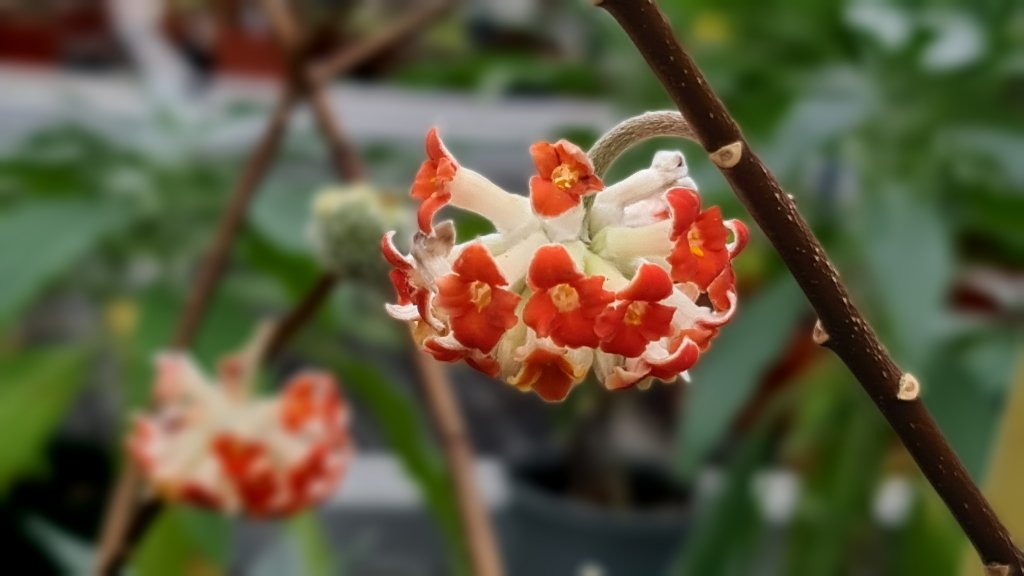
Edgeworthia chrysantha ‘Red Dragon’ is a striking plant. It is very difficult to get hold of but is slowly becoming more available in the UK. I planted one of these last year and hope to see it flourish. The fragrance is not so punchy as straight chrysantha but its peculiar appearance is a real head turner.

Tip: Once your edgeworthia is established, keep an eye around the bottom of the plant. Small suckers can be carefully teased away and potted up to make new plants. I may be shot for telling you this!

Wintersweet

Chimonanthus praecox

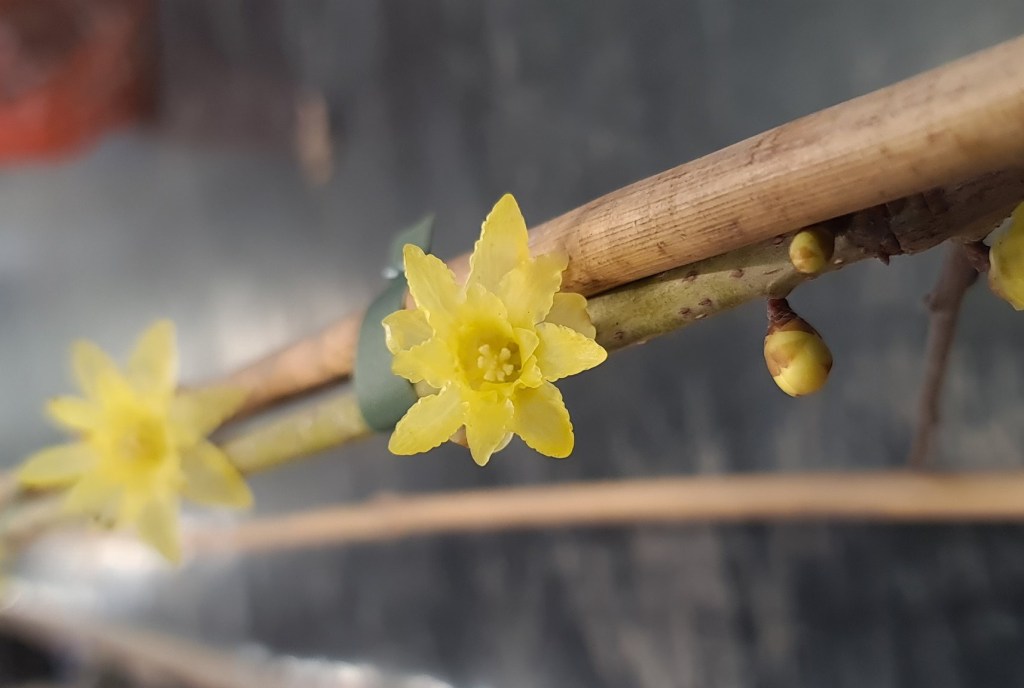
Chimonanthus praecox (wintersweet) is possibly the most eagerly awaited flowering shrub of winter. The flowers are not much to look at, a little scruffy and often blackened by frost but the beautiful scent they emit billows around the gardens. Often mistaken for a witch-hazel, wintersweet is actually related to calycanthus in the calycanthaceae family. C. praecox is a very large and sprawling shrub, reaching 4m x 4m. It can look scruffy for most of the year but with around two months of fabulous scent, it is worth growing if you have the room. Bear in mind, patience is needed with this one. It takes 7 years to flower and if pruned, even longer.

Chimonanthus praecox ‘Cobhay Sunshine’

I recently came across Chimonanthus praecox ‘Cobhay Sunshine’, from Junkers Nursery in Somerset. A more compact and upright form of wintersweet, ‘Cobhay Sunshine’ is said to flower on younger plants. The flowers are pure yellow, without the red centre found in the straight species and the scent is fantastic.

Christmas Box

Sarcococca confusa

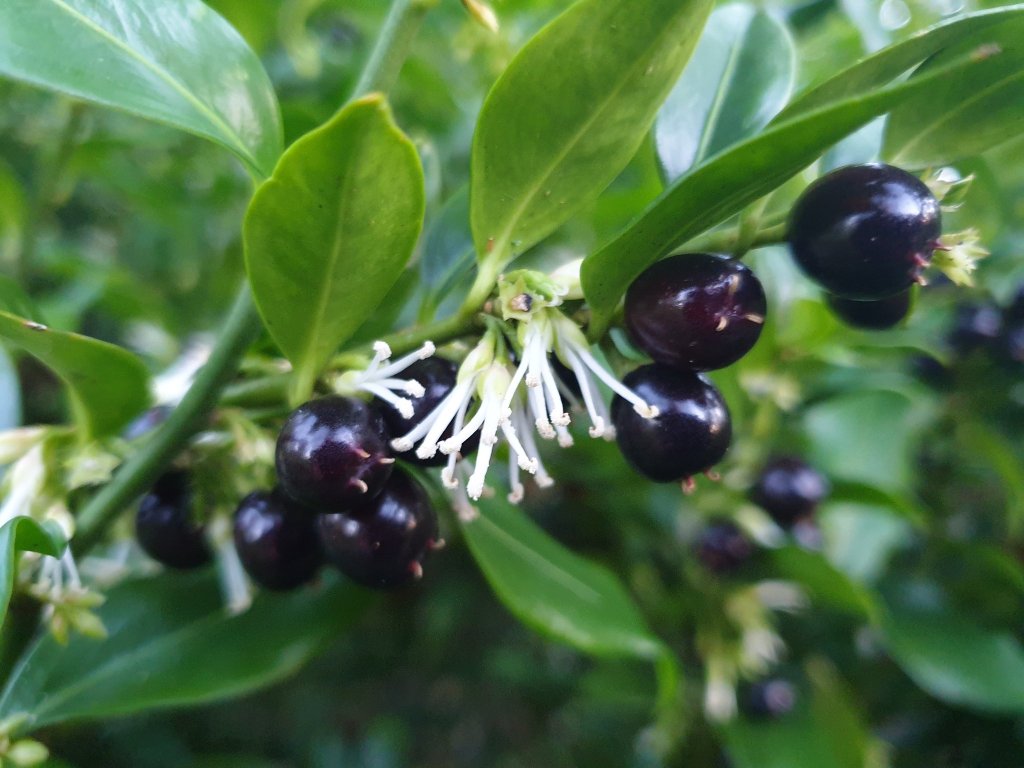
Sarcococca (Christmas box) is a genus in the buxaceae family, closely related to box. It is native to southeastern Asia and the Himalayas. I find sarcococcas to be some of the easiest plants to grow for winter interest. Sarcococca hookeria var. digyna is in fact a little too easy to grow and can create a very wide, suckering shrub. Saying this, it doesn’t spread too fast. We grow a number of different species including S. confusa, which has white flowers followed by black berries and S. ruscifolia, white flowers followed by red berries. If you are lucky, last year’s bright berries will hang around to contrast with this years flowers.

Sarcococca hookeriana var. digyna ‘Winter Gem’

Finally, Sarcococca hookeriana var. digyna ‘Winter Gem’ is one cultivar I highly recommend. It seems to be less vigorous than the species, in fact I have had one happily growing in quite a small planter for a few years. The red calyxes of the flowers are very showy behind the white petals. Bear in mind the scent from sarcococcas is quite strong, some might say acrid, so not a plant for a confined space or too close to the house. It makes me sneeze! Christmas box is usually quite an affordable shrub so a good starter plant for a winter garden.

I am very fortunate to work in a Botanical Garden and lucky enough to work around these wonderful plants on a daily basis. Some of these plants are quite expensive to buy but adding just one winter flowering plant to your garden will lift the spirits during these darker months. Winter is a magical season, we should cherish it.

Continue reading “A Fragrant Winter Wonderland”